
War for Westeros Gameplay
How War for Westeros plays: territory conquest on a strategic map, real-time battles, faction asymmetry, and what the official showcase confirms.
Quick answer
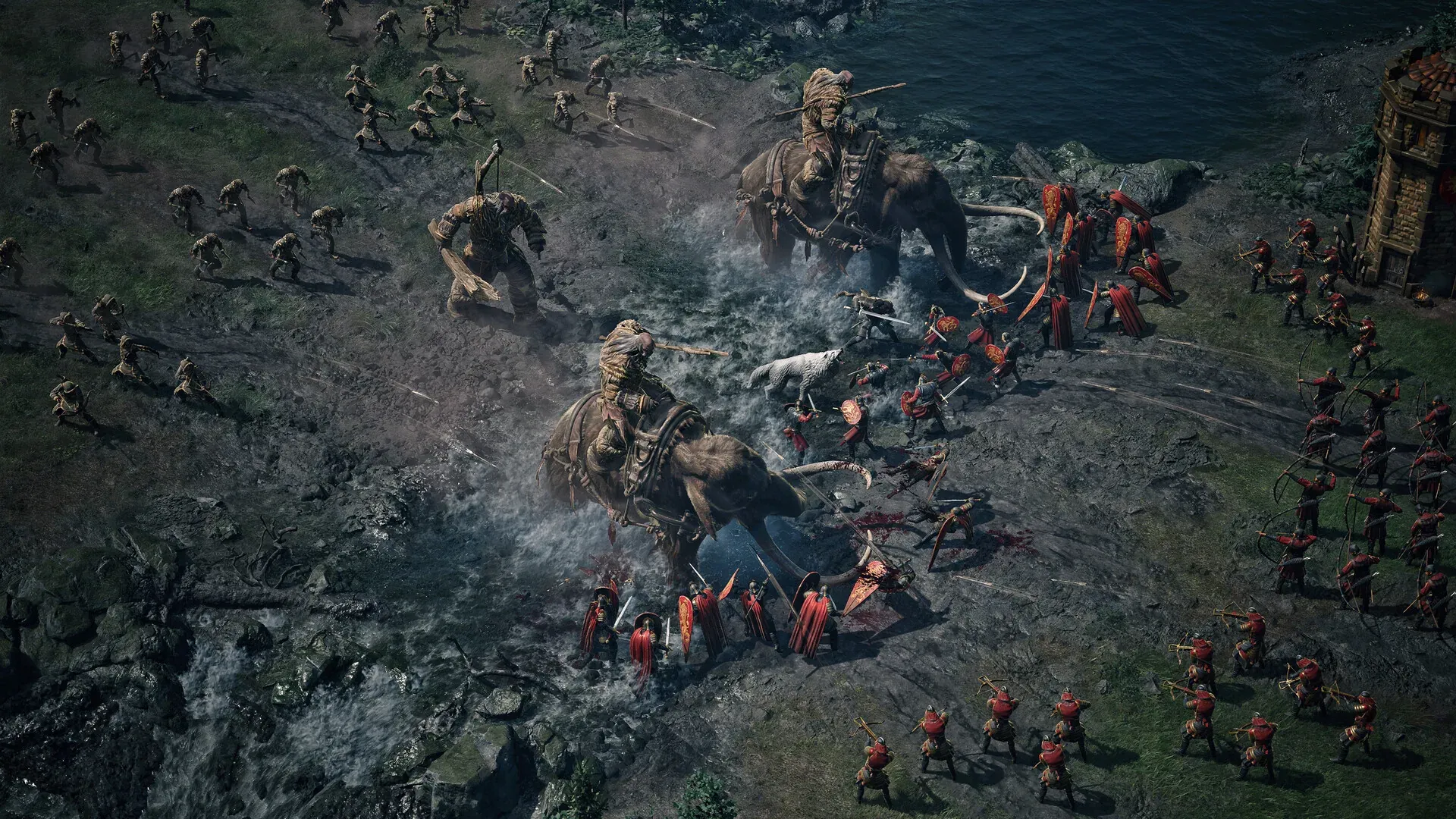
War for Westeros is a premium, classic real-time strategy game. The August 25 reveal confirms a broader loop: choose Stark, Lannister, Targaryen or White Walker forces, train units, control resources, build, capture territory and fight in real time. Heroes and formation choices shape those battles, while solo conquest and multiplayer skirmishes remain part of the announced design.
At a glance
| System | What is confirmed | What it means for a player |
|---|---|---|
| Game type | Classic premium RTS | Decisions happen during a live battle, not in turns |
| Battlefield | Infantry, cavalry, siege engines, giants and dragons | Army composition should answer the threat in front of you |
| Heroes | Level up, unlock abilities and strengthen nearby armies | Position the hero with the force that needs the benefit |
| Space | Routes, defensive positions, flanking and key areas matter | A shorter route is not always the safer route |
| Economy and control | Train units, control resources, build and capture territory | Winning fights must support map control and reinforcement |
| Modes | Solo conquest, multiplayer skirmish; Steam lists Online PvP and Co-op | Rules and player counts still need launch confirmation |
How the campaign and battles connect
PlaySide describes a sandbox-style, player-led campaign. You pick one of four factions and fight a conquest across Westeros, moving between a strategic map divided into territories and the RTS battles that take place at locations in that world. Alliances and betrayals are part of that layer, and the ending is yours to write: the campaign decides which faction wins the war and which hero ends up on the Iron Throne rather than retelling the series.
That structure shapes gameplay decisions in two directions. On the map you choose where to commit, what to defend and who to trust; in battle you convert that choice into units, buildings and territory capture. The campaign guide walks through the map layer, and the game modes guide covers the formats around it.
The practical battle loop
- Secure the economy. Identify the resources and territory needed to keep training units instead of treating every fight as an isolated skirmish.
- Scout the approach. Check the route, the likely defensive ground and the space an opponent could use to reach your flank.
- Identify the threat. A large infantry block, a cavalry charge, siege pressure and a fantasy-scale unit create different problems. The developers explicitly frame counter-play as part of the design.
- Set the formation. Keep the main force coherent and avoid sending a hero or specialist unit forward without protection.
- Choose push or hold. Advance when the route, reinforcements and support are favorable; hold when terrain or the enemy composition makes a direct fight expensive.
- Reassess after contact. War for Westeros emphasizes unit behavior and physical impact, so the first collision should teach you how the line is actually moving before you commit every reserve.
Three useful pre-launch scenarios
- Enemy cavalry appears: do not answer with basic infantry alone. Mark the threat, prepare an anti-cavalry role when the game exposes the exact roster, and protect that response from a flank.
- Your army reaches a narrow route: treat it as a position to hold and observe, not an automatic invitation to attack. The map design is built around meaningful defensive and flanking choices.
- A hero is ahead of the line: pull the hero back into the group that benefits from the nearby-army effect. The exact range and cooldown are not public, so test spacing rather than inventing numbers.
For more detail, compare the units and counters guide with the maps and terrain guide.
Why the game is balanced the way it is
PlaySide has been asked about balance repeatedly since dragons appeared, and its answer is worth reading as design intent rather than a promise. The studio balances through internal playtests and player feedback, wants strategies to have counters, and says it will not chase competitive purity at the cost of spectacle. Big units are meant to be earned: you make the strategic investment required to reach a dragon, and your opponent gets chances to counter that plan before it pays off.
For a pre-release purchase decision, that means expensive units are not automatic win buttons, and no published tier list survives contact with the final build. Treat any current “best faction” or “best hero” claim as speculation.
What is not public yet
The reveal confirms resources and building as systems, but there is still no official resource chart, building tree, hotkey list, unit-cost table, final victory-condition guide or tested build order. The closed beta is taking sign-ups for a test later in 2026, but the shared build is not public and no date is confirmed. This page will be versioned after a playable build is available.
FAQ
Is War for Westeros turn-based?
No. The official description calls it a real-time strategy game.
Is this a Total War game?
No official source describes it as Total War. It is a separate PlaySide Studios RTS set in Westeros.
Can I play it now?
No. Steam still marks the game as not yet available, with the window listed as 2027 and the official site saying early 2027.
Are exact counters known?
Only the counter-play principle and broad unit families are confirmed. Exact values and matchups require a public build.
Sources
- Official Game Site
- Official gamescom recap — campaign structure and balance intent
- PlaySide Development Update
- Official Gameplay Reveal Trailer post
See the release and platforms page for availability changes.
Related Articles
guides
War for Westeros Beginner Guide
Prepare for War for Westeros with a practical RTS checklist covering scouting, formations, heroes, unit threats, terrain and pre-release limits.
guides
War for Westeros Heroes
Every hero PlaySide has confirmed for War for Westeros so far, from Robb Stark and Jon Snow to the Mountain and Arya Stark, plus how leveling works.
guides
War for Westeros Units and Counters
Use the confirmed War for Westeros unit families and counter-play framework to prepare for infantry, cavalry, siege engines, giants and dragons.