
War for Westeros Beginner Guide
Prepare for War for Westeros with a practical RTS checklist covering scouting, formations, heroes, unit threats, terrain and pre-release limits.
Quick answer
War for Westeros is not released yet. There is no verified tutorial route, build order, hotkey sheet or unit spreadsheet to memorize. A useful first-battle habit is scout → identify the threat → position the hero → choose push or hold → reassess after contact.
Before the first battle
| Check | Question to ask |
|---|---|
| Objective | Am I conquering, contesting or defending an area? |
| Route | Which path exposes the army to a flank? |
| Enemy | Is the threat infantry, cavalry, siege or a fantasy-scale unit? |
| Support | Which troops should stay near the hero? |
| Exit | Where can the army retreat without crossing the same danger? |
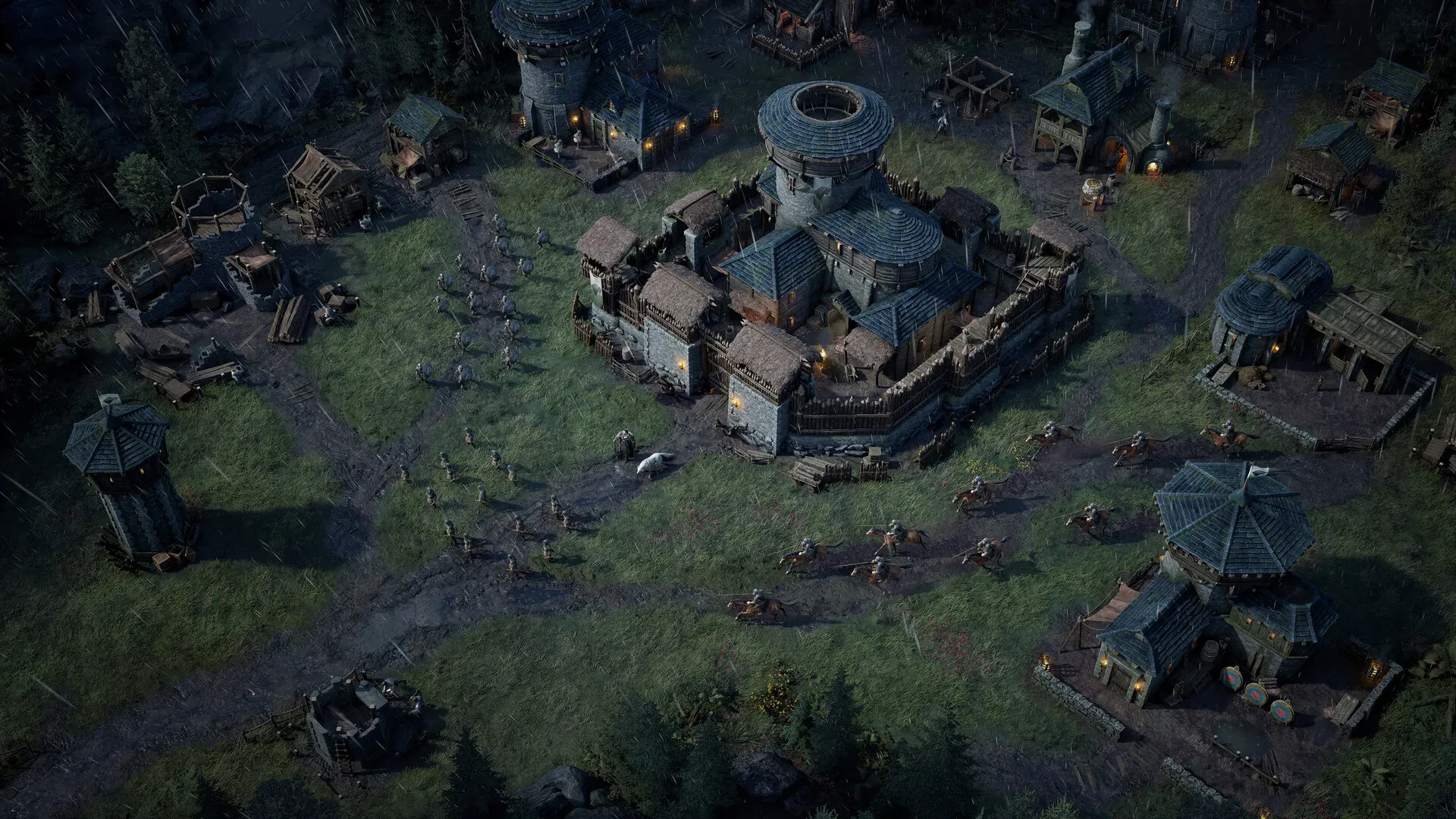
The official site positions the game as a premium RTS with solo conquest and multiplayer skirmish. The announced roster includes infantry, cavalry, siege engines, giants and dragons, while the Development Update highlights terrain, unit behavior, physical impact and counter-play.
A first-battle routine
- Scout before splitting. Learn the route and defensive ground before sending a large group away from support.
- Read the enemy composition. A cavalry charge is a different question from a siege line; do not send the same basic infantry answer to every problem.
- Keep the hero with the army that needs the effect. Heroes can level up, unlock abilities and strengthen nearby troops.
- Push only with a reason. Advance when the route and support are favorable; hold when the enemy has the better position.
- Review the first collision. Physical impact and unit behavior are design priorities, so observe how the line actually moves before committing reserves.
Three preparation scenarios
- Open ground: protect the army’s sides and keep a route home. A wide approach may offer speed but also more flank angles.
- Narrow route: treat it as a defensive question first. Hold, scout and decide whether the opponent is trying to draw you forward.
- Cavalry threat: mark an anti-cavalry role as the first test item. Do not invent its exact unit name or multiplier before the roster is public.
Use units and counters for threat notes, heroes for positioning, and maps and terrain for spatial decisions.
What will be added after launch
The next verified revision should include the tutorial sequence, resource priorities, faction starting conditions, confirmed hotkeys, patch number and separate solo/multiplayer examples. Steam lists single-player, Online PvP and Co-op, but not the complete mission structure or co-op player count.
FAQ
Can I follow a confirmed opening build?
No. The game is unreleased and official resource values are not public.
What should I practice now?
Practice reading formations, routes, defensive positions and the difference between a threat and a counter.
Is this advice based on a playable beta?
No. It is a source-bounded preparation framework, not hands-on testing.
Sources
Related Articles
guides
War for Westeros Gameplay
How War for Westeros plays: territory conquest on a strategic map, real-time battles, faction asymmetry, and what the official showcase confirms.
guides
War for Westeros Heroes
Every hero PlaySide has confirmed for War for Westeros so far, from Robb Stark and Jon Snow to the Mountain and Arya Stark, plus how leveling works.
guides
War for Westeros Units and Counters
Use the confirmed War for Westeros unit families and counter-play framework to prepare for infantry, cavalry, siege engines, giants and dragons.